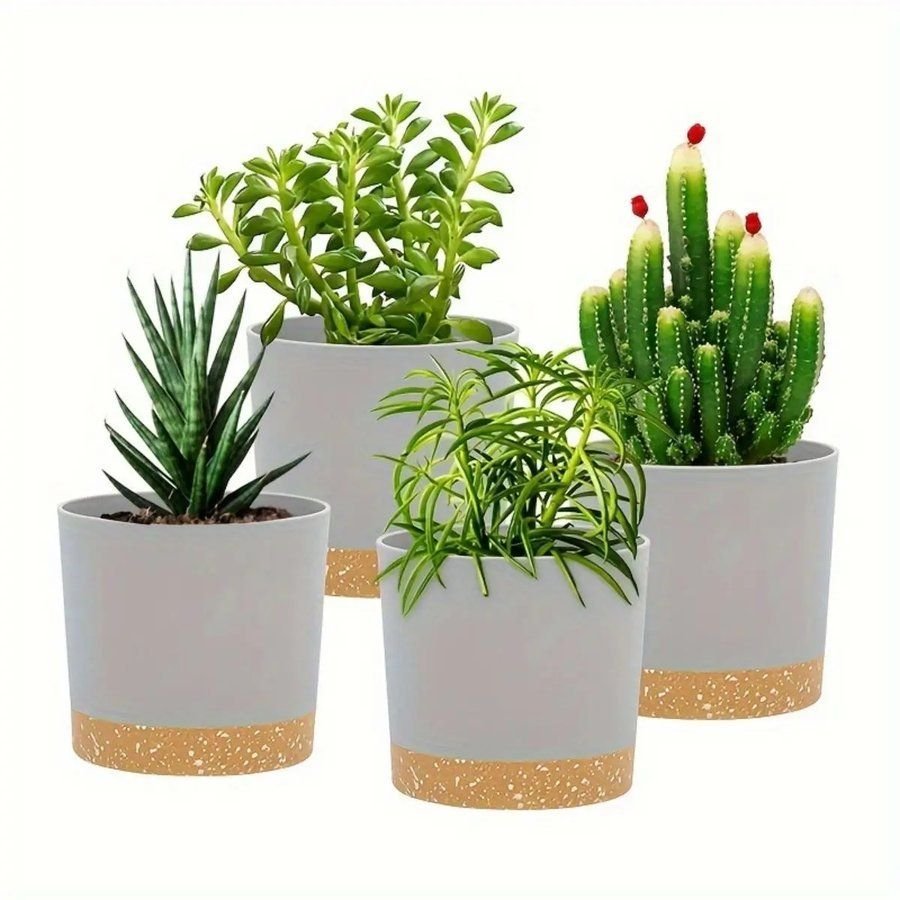
Quick answer: Pot size means the diameter across the inside of the rim, in centimetres. Nursery pots run in standard steps of roughly 9, 12, 15, 17, 19, 21 and 24cm. When repotting, move up one step, which is three to five centimetres, rather than jumping several at once.
Pot sizing confuses people because the number on the label describes something quite specific, and almost nobody says which measurement it is.
What the number means
The diameter across the inside of the rim. Not the height, not the base, not the widest external point.
That matters because pots taper. A pot sold as 20cm can measure 20cm across the top and 14cm across the base, and it is the top number you are given.
So when a plant arrives in a "17cm pot", the root ball is roughly 17cm across at the top and less at the bottom.
The standard steps
Nursery pots come in a conventional ladder. Knowing it makes repotting simple, because you just move up one rung.
| Size | Roughly suits |
|---|---|
| 6-9cm | Seedlings, cuttings, small succulents |
| 12cm | Young houseplants, herbs |
| 15-17cm | The size most houseplants are sold in |
| 19-21cm | An established houseplant after one repot |
| 24-30cm | Floor plants, small shrubs, patio pots |
| 40cm+ | Statement plants, small trees, garden planters |
Those are conventions rather than rules, but the ladder is consistent enough to plan around.
How far to step up
One rung. Three to five centimetres wider than the current pot.
The temptation is to jump from 15cm straight to 30cm and be done with it. That leaves a wide ring of compost no root can reach, which stays wet for weeks and rots the root ball from the outside — the whole argument in the pot size guide.
If you would rather not measure, the pot size calculator asks what you have and tells you what to buy.
Depth matters separately
Two pots can both be 21cm across and hold very different amounts of compost.
A standard pot is roughly as deep as it is wide. A bulb pan or bowl is much shallower, which suits succulents and cacti and anything surface-rooting. A long tom is deeper, which suits taprooted plants.
Check the stated height as well as the diameter, especially when buying online — the quality guide covers what else to check.
Cover pots use a different number
If the plant is staying in its nursery pot and you just want something nicer around it, you need one to two centimetres of clearance, not three to five.
Measure the nursery pot's rim, add a couple of centimetres, buy that. Too much clearance and the inner pot tips or sinks. There is more in the cachepot guide once that publishes, and most of the decorative range is used this way.
Litres, and why you sometimes see them
Larger planters are often sold by volume rather than diameter, because volume is what tells you how much compost to buy.
There is no clean conversion, because it depends on the shape. Treat litres as a guide to compost quantity and centimetres as a guide to whether the root ball fits.
Common sizes people search for
A 30cm pot is a floor-plant size — a good home for something that has outgrown a 24cm. A 50cm pot is a genuine statement planter and will need serious weight or ballast if it is going somewhere windy. A 60cm pot is tree territory, and the extra large range is where those live.
For everything in between, small pots, large pots and the full range cover the ladder. The sizing and repotting guide has the rest.
The short version
- Pot size is the diameter across the inside of the rim, not the height or the base.
- Nursery pots follow a ladder: roughly 9, 12, 15, 17, 19, 21 and 24cm.
- Step up one rung when repotting - three to five centimetres, never several at once.
- Depth varies independently of diameter; bowls suit succulents, long toms suit taproots.
- Cover pots need only one to two centimetres of clearance, not three to five.
Frequently asked questions
How is plant pot size measured?
By the diameter across the inside of the rim, in centimetres. It is not the height, the base or the widest external point. Because most pots taper, a pot sold as 20cm can measure only 14cm across its base.
What are the standard plant pot sizes?
Nursery pots follow a conventional ladder of roughly 6 to 9cm for seedlings, 12cm for young plants, 15 to 17cm for most houseplants as sold, 19 to 21cm after one repot, 24 to 30cm for floor plants, and 40cm and up for statement planters.
How many cm bigger should the new pot be?
Three to five centimetres, which is one rung up the standard ladder. A larger jump leaves compost that no root can reach, and that compost stays wet for weeks and rots the root ball from the outside in.
Does pot depth matter as well as width?
Yes, and it varies independently. A standard pot is about as deep as it is wide, a bulb pan or bowl is much shallower and suits surface-rooting plants such as succulents, and a long tom is deeper and suits taprooted plants.
Why are some planters sold in litres?
Because volume tells you how much compost to buy, which is the more useful number on a large planter. There is no clean conversion between litres and centimetres, since it depends on the shape, so use centimetres to check the root ball fits.