Quick answer: A snake plant wants a pot only 2 to 3cm wider than its root ball, with at least one drainage hole. It stores water in its leaves and must dry out completely between waterings, so an oversized pot holds wet compost the roots never reach and causes rot.
Snake plants have a reputation for being unkillable, and it is mostly deserved. The exception is the pot. Almost every dead snake plant I saw come back to a nursery counter died of root rot, and the pot was the reason.
The plant is a succulent, whatever the label said
Dracaena trifasciata stores water in those thick upright leaves. That is what lets it sit in a dim hallway for a month and look fine.
It also means the roots expect to dry out completely between drinks, the way they would in thin, gritty soil in West Africa.
Treat it like a fern and you will lose it. Treat it like a cactus and it will outlive your sofa.
Drainage is not optional here
A drainage hole is the single thing that matters. Not a gravel layer, not a fancy material — a hole.
Snake plant roots are shallow and fleshy. Sat in a centimetre of standing water they turn to mush within days, and the damage runs up into the leaf bases before anything looks wrong on top.
By the time the outer leaves go soft and yellow at the base, the rhizome underneath is usually already gone.
If you have fallen for a beautiful pot with no hole, use it as a cover pot. Keep the plant in its nursery pot, water it over the sink, let it stop dripping, then drop it back in. You get the look and the plant survives it.
Go one size smaller than you think
This is the advice people resist most. A snake plant genuinely likes being snug.
A pot only 2 to 3cm wider than the root ball is right. Oversize it and you get a large volume of compost that no root is drinking from, which stays wet for weeks — exactly the condition the plant cannot handle.
Being a little root-bound also encourages it to send up new shoots rather than putting everything into roots. Most snake plants only need repotting every three or four years, usually when the rhizomes start to push the pot out of shape.
If you want the numbers for other plants too, the pot size guide in cm covers the full range.
Material: terracotta if you overwater
Unglazed terracotta is porous. It pulls moisture out of the compost through the walls and lets it evaporate, so the mix dries several days faster than it would in plastic or glazed ceramic.
For a plant that wants to dry out, that is a safety margin built into the pot. If you know you are heavy-handed with the watering can, buy terracotta and stop worrying.
Glazed ceramic and plastic both hold water longer. Neither is wrong — they just ask you to water less often and check first. Plastic has one real advantage: a heavy mature snake plant in a plastic pot inside a decorative cover is far easier to move than one potted directly into stoneware.
There is more on how each material behaves in the terracotta vs ceramic vs plastic comparison.
Weight, because they get tall
A snake plant at full height is top-heavy and the leaves are rigid. A light plastic pot on a windowsill will go over, usually taking the leaves with it, and a snapped snake plant leaf never regrows from the break.
Once the plant is over about 60cm, put it in something with real mass at the base — stoneware, concrete or terracotta — or sit the plastic pot inside a heavy cover pot. A woven belly basket is the cheap version of this and works well for floor-standing plants.
The one pot to avoid
We sell self-watering pots and I would not put a snake plant in one.
A self-watering reservoir keeps the compost evenly moist by design. That is superb for a peace lily or a fern. For a plant whose entire survival strategy is drying out completely, it removes the one condition it needs.
If you already have one, take the wick out and use it as an ordinary pot, or save it for something thirstier. There is a fuller explanation of the mechanism in how self-watering pots work.
What to actually buy
- A pot 2 to 3cm wider than the root ball, with at least one drainage hole.
- Unglazed terracotta if you overwater; glazed ceramic or plastic if you underwater.
- A saucer, so the drained water has somewhere to go and you can tip it away.
- Free-draining compost — houseplant mix with a third added perlite or grit, or a bagged cactus mix.
- Something heavy at the base once the plant passes 60cm.
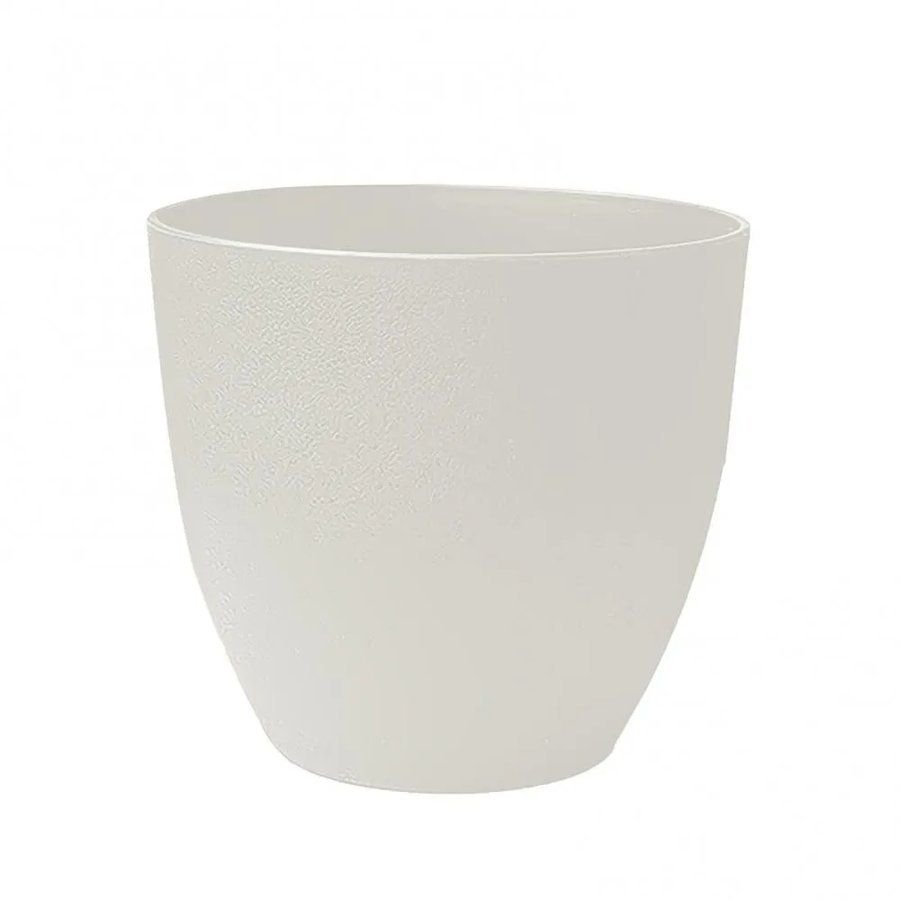
For a small or young plant, a simple stone-look windowsill pot does the job. For a mature one on the floor, look through the large indoor pots and pick for weight as much as looks.
The short version
- Snake plants are succulents: the compost must dry out completely between waterings.
- A drainage hole matters more than the material, the shape or the price.
- Go 2 to 3cm wider than the root ball only — an oversized pot stays wet and rots the rhizome.
- Unglazed terracotta dries fastest, so it is the forgiving choice if you overwater.
- Avoid self-watering pots for this plant; a pot with no hole is fine as a cover pot.
Frequently asked questions
What size pot does a snake plant need?
One only 2 to 3cm wider than the current root ball. Snake plants like being snug, and an oversized pot holds a large volume of compost that the roots never drink from, which stays wet for weeks and causes root rot.
Do snake plants need drainage holes?
Yes. It is the single most important feature. The roots are shallow and fleshy and turn to mush within days in standing water. If a pot you love has no hole, keep the plant in its nursery pot and use the nice one as a cover pot.
Is terracotta good for snake plants?
Very. Unglazed terracotta is porous, so moisture evaporates through the walls and the compost dries several days faster than in plastic or glazed ceramic. For a plant that wants to dry out, that is a built-in safety margin against overwatering.
Can I put a snake plant in a self-watering pot?
Better not to. A self-watering reservoir keeps compost evenly moist, which is the opposite of what a snake plant needs. Remove the wick and use it as a normal pot, or save it for a thirstier plant such as a peace lily or a fern.
How often should I repot a snake plant?
Every three or four years, or when the rhizomes start pushing the pot out of shape. Being slightly root-bound is fine and encourages new shoots, so there is no benefit to repotting on a schedule.