Quick answer: Almost always, yes. Without a hole, water collects at the base and roots sitting in it rot, usually within a fortnight. If you love a pot with no drainage, use it as a cover pot with a plain nursery pot inside. Drilling is possible but risks cracking the pot.
I spent years at a garden centre nursery being handed sad, yellowing plants by people who wanted to know what they had done wrong.
Most of the time they had done almost nothing wrong. The pot had.
What actually happens without a hole
You water. The water goes down through the compost. And then it stops, because there is nowhere for it to go.
A reservoir forms at the bottom of the pot. The compost down there stays saturated, the air pockets fill, and roots that need oxygen sit in stagnant water instead.
Root rot follows. Within a fortnight on a small pot. The leaves yellow, the plant wilts even though the soil is wet, and by the time it looks wrong the roots have already gone soft and brown.
The confusing part
An overwatered plant and an underwatered plant look almost identical. Drooping, yellowing, sad.
So people water more. That is the moment a plant that could have been saved usually isn't.
Before you water anything, put a finger two knuckles into the compost. If it is damp down there, the problem is not thirst. The care and drainage guide goes through the whole diagnosis.
So you have fallen for a pot with no hole
It happens constantly, and the fix is easy. Use it as a cachepot.
Keep the plant in the plain plastic nursery pot it arrived in, and drop that inside the decorative one. Water over a sink, let it drain properly, then put it back.
You get the pot you like and the plant gets working drainage. Our decorative pots are used this way constantly, and a set of clear nursery pots is the cheap thing that makes it work.
Can you drill one?
Sometimes. It depends what the pot is made of.
| Material | Drilling |
|---|---|
| Plastic | Easy. Any drill bit, low speed. |
| Terracotta, unglazed | Doable with a masonry bit and patience. |
| Glazed ceramic | Risky. The glaze chips and the body cracks. |
| Metal | Easy, but the hole will rust first. |
| Concrete or stone | Masonry bit, slow, wear eye protection. |
Go slow, keep the bit wet, and accept you may lose the pot. On anything glazed I would use it as a cachepot instead. More on how each material behaves in the materials guide.
Things that do not replace a hole
A layer of gravel or crocks at the bottom. This one is stubborn and it is wrong — it does not create drainage, it just raises the saturated zone higher up the pot. The Royal Horticultural Society is clear that crocking is unnecessary in most containers RHS.
Watering less. It helps, but you are managing a fault rather than fixing one, and one heavy-handed watering undoes it.
Activated charcoal. Fine as an extra, useless as a substitute.
The exceptions
There are a few. Closed terrariums work precisely because they recycle their own moisture. Some bog and marginal plants genuinely want wet feet. And a well-designed self-watering pot has a reservoir separated from the compost by a wick, which is a different thing entirely.
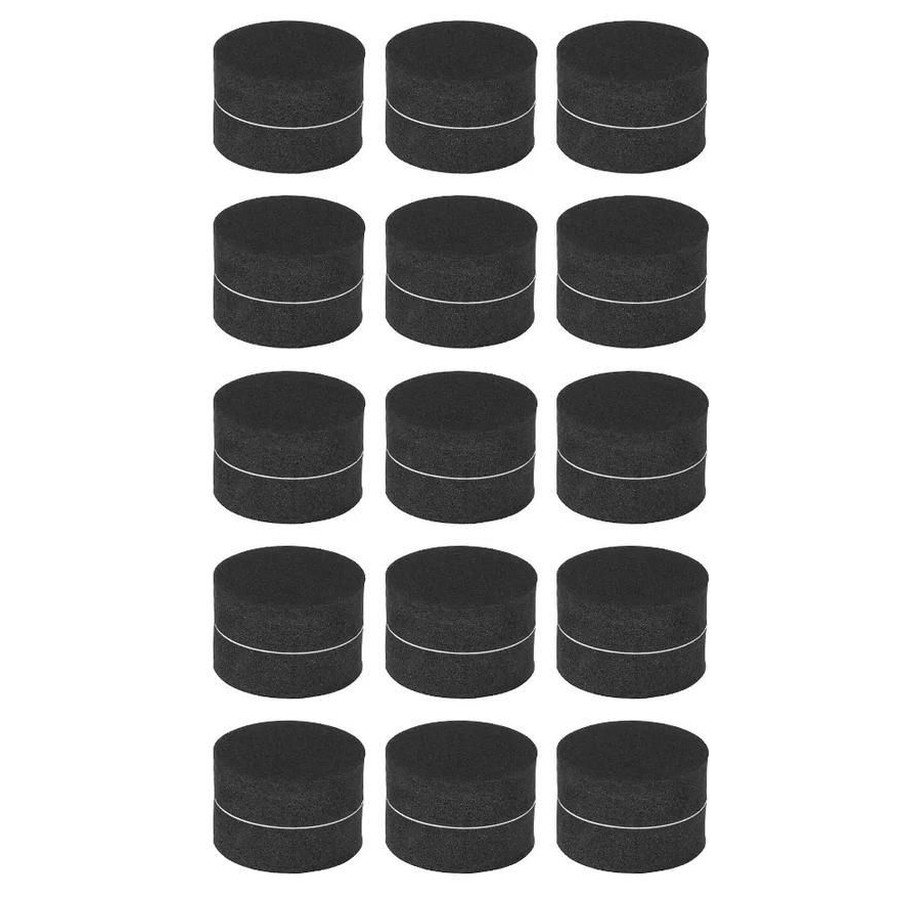
Outside, drainage matters even more, because rain arrives whether you want it or not. Pot feet lift the base clear so water leaves instead of pooling — these small ones do the job without being visible.
What to look for when buying
A hole you can see, ideally more than one on anything over about 20cm. A saucer if it is going indoors, which is what pot and saucer sets exist for — the fluted forest pot and saucer is a straightforward example.
And check the drainage on any pot you are buying for a plant that hates sitting wet, which is most of them. The full range lists it, and the buyer's guide covers what else to check.
If you want the clearest example of a plant that lives or dies on this one detail, it is the snake plant.
The short version
- Without drainage, water pools at the base and roots rot, often within a fortnight.
- Overwatered and underwatered plants look alike - check the compost two knuckles down before watering.
- A pot with no hole works fine as a cachepot with a plain nursery pot inside.
- Gravel at the bottom does not create drainage; it just raises the waterlogged zone.
- Drilling works on plastic and unglazed terracotta but risks cracking glazed ceramic.
Frequently asked questions
Can a plant survive in a pot with no drainage hole?
Some can for a while if you water very sparingly, but most will not. Water collects at the base with nowhere to go, the compost stays saturated and roots that need oxygen begin to rot. Using the pot as a cover pot is far safer.
Does putting gravel in the bottom help drainage?
No. It is one of the most persistent bits of bad advice in gardening. A gravel layer does not give water anywhere to escape to; it simply raises the saturated zone higher up the pot, leaving roots in the same trouble.
How do I use a pot with no hole safely?
Treat it as a cachepot. Leave the plant in the plain nursery pot it came in and sit that inside the decorative one. Water over a sink, let it drain fully, then return it. You get the pot you want and working drainage.
Can I drill a drainage hole myself?
In plastic, easily. In unglazed terracotta, with a masonry bit and patience. In glazed ceramic it is genuinely risky, because the glaze chips and the body cracks. Go slowly, keep the bit wet and accept you may lose the pot.
Do outdoor pots need drainage too?
Even more so, because rain arrives whether you want it or not and a pot outside can fill faster than it empties. Make sure the hole is not blocked, and raise the pot on feet so water can actually leave the base.